
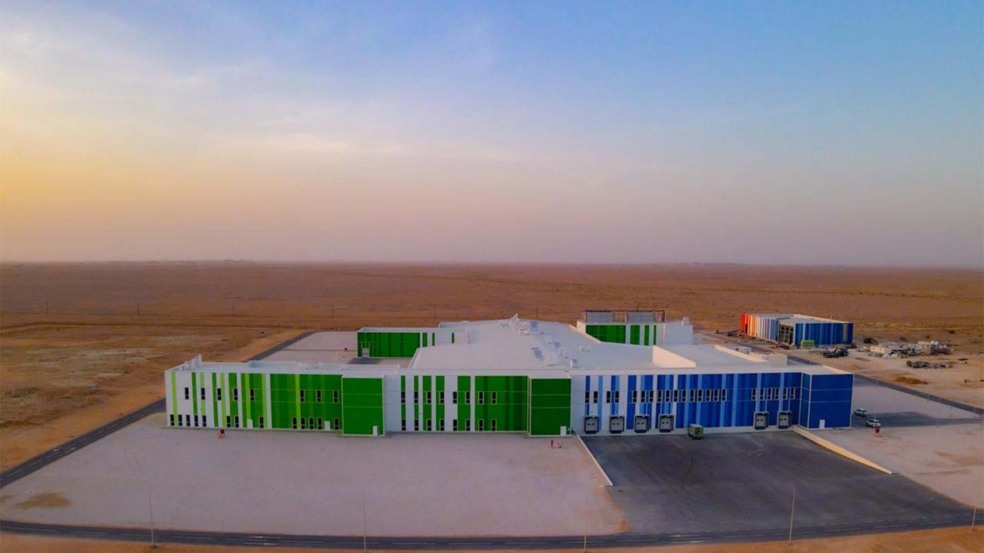
JBS invested $150 million to acquire an 80% stake in a newly created holding company with Oman Food Capital, the food investment arm of the Oman Investment Authority, marking its largest investment to date in the Middle East and a key step in its push into the halal meat market.
The joint venture will operate a multi-protein production platform in Oman, with the sovereign fund retaining the remaining 20% stake. The project gives JBS direct exposure to a fast-growing market with more than 2 billion consumers.
The venture launches with two large-scale industrial assets. One is a poultry plant with processing capacity of 600,000 birds per day. The other is a beef slaughterhouse able to process 1,000 head per day — the largest beef facility in the region — which will also handle the slaughter of 5,000 lambs daily.
The investment strengthens JBS’s geographic diversification strategy and positions the company to compete more aggressively in halal markets, where local production has become a prerequisite amid food security policies adopted by Middle Eastern governments.
The move also heightens competition with BRF, which operates a joint venture with Saudi Arabia’s Public Investment Fund and has been expanding its local footprint to serve halal demand.
“With food self-sufficiency targets imposed by governments such as Saudi Arabia and Oman, producing locally has become mandatory for companies that want to be relevant in the Middle East,” JBS global Chief Executive Officer Gilberto Tomazoni said.
Tomazoni cited geopolitical tensions and post-pandemic concerns over food security as key drivers behind the strategy. “Countries are looking for food security and self-sufficiency, especially post-Covid. To be competitive, you need local production,” he said.
Notícias Relacionadas

LOGISTICS
Grain Freight Rates Jump on Record Crop, Minimum Price Floor
Soybean harvest in Mato Grosso is at the fastest pace in a decade, pushing freight rates up between 15% and 20% last month, according to Esalq-Log
COMMODITIES
European Retailers Warn Traders: Brazil's Soy Moratorium Still Stands
Retailers are signaling that they will begin assessing companies individually, applying the same criteria used under the soy moratorium
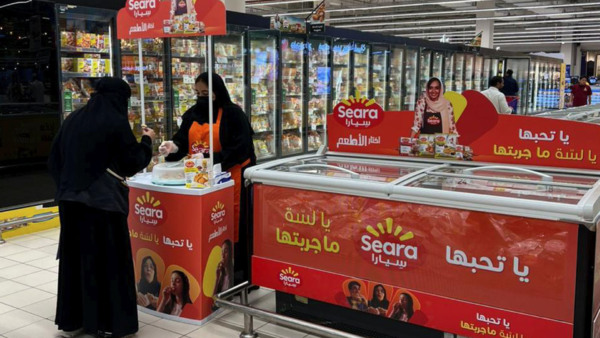
Last month, JBS signed a partnership with the Arabian Company for Agricultural and Industrial Investment (ENTAJ) to produce chicken in Jeddah, Saudi Arabia, under its Seara brand. The company already operates two processed-food plants in the country and plans to expand the Jeddah facility following the partnership, bringing its total investment in Saudi Arabia to $85 million.
The Oman project, however, represents the largest investment ever made by the Batista brothers’ company in the region and the first to include upstream production stages of the supply chain.
Supply Chain
The poultry plant, located in the Ibri region of northern Oman, about 280 kilometers south of Dubai, is expected to begin operations in around 12 months. Most of the capital will be allocated to this facility, which is still under construction. A feed facility will also be built nearby.
The beef unit, located in Thumrait in southern Oman, has been idle for about a year. While some upgrades are planned, operations are expected to resume more quickly, in approximately six months.
To secure cattle supply, JBS has been scouting suppliers in nearby countries. According to Tomazoni, some African nations in the Ethiopia region already have the capacity to supply the plant in its initial phase. The facility’s proximity to Africa supports the strategy, as several countries on the continent already export beef to Middle Eastern markets.
“There are suppliers, but we are going to systematically develop a supply chain in Africa,” Tomazoni said. Existing slaughterhouses are smaller, he noted, adding that the difference lies in scale. A plant capable of processing 1,000 head per day, such as the one in Thumrait, would be considered mid-sized in Brazil.
“Our investments don’t stop here,” Tomazoni said. “We decided to build a very competitive production platform in the region.”