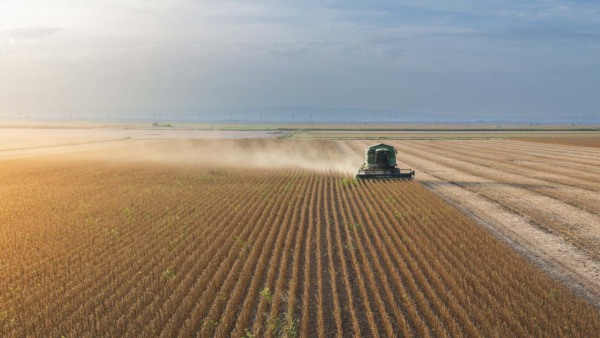


Truck freight costs in Brazil have climbed as much as 20% in January as the soy harvest accelerates in Mato Grosso, the country’s top grain-producing state, according to Esalq-Log, a logistics research group at the University of São Paulo.
The advance of the 2025/26 harvest in Mato Grosso to the fastest pace in a decade pushed freight rates up between 15% and 20% last month, reshaping the logistics outlook for the rest of the year. Nationwide, tariffs are expected to average about 8% higher in 2026, Esalq-Log said, though without the sharp spikes seen from February last year.
By the end of January, roughly 25% of the soybean harvest in Mato Grosso had been completed, up from 12% a year earlier. Timely planting and favorable weather in 2025/26 allowed soybeans to move quickly from fields to trucks headed for ports, driving a rapid increase in freight prices early in 2026.
Further adjustments over the year will be driven mainly by the harvest pace and the booming production: the soybean harvest may reach as much as 180 million tons, a 4% increase compared to last season. There’s also a new element this year: Brazil’s minimum freight price floor is expected to rise by 5% amid stricter enforcement.
For February, Esalq-Log estimates that average grain freight prices could jump by as much as 20% in Mato Grosso as harvest in the state may exceed 70% of the planted area by mid-month.
“Last year was marked by a concentration of the harvest in February, with price spikes and higher freight rates from that month onward,” Fernando Pauli de Bastiani, a researcher at Esalq-Log, said on Tuesday. “Even though price peaks should be less volatile than in 2025, we’ll see an elevated freight level for a longer period,” he said, adding that stable fuel prices in the short term are the main factor limiting further increases.
Notícias Relacionadas
COMMODITIES
European Retailers Warn Traders: Brazil's Soy Moratorium Still Stands
Retailers are signaling that they will begin assessing companies individually, applying the same criteria used under the soy moratorium

MIDDLE EAST
JBS Ties Up with Saudi Poultry Firm to Produce Chicken Locally
Deal aligns Brazilian meatpacker with Saudi Arabia’s push for poultry self-sufficiency
Brazil’s winter corn crop is also expected to benefit from an ideal planting window. Output should be close to last year’s levels, at nearly 140 million tons, helping to keep freight prices supported for longer.
Weaker demand from sugar, fertilizer
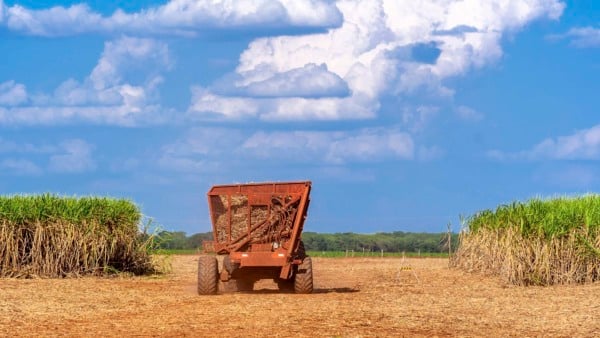
By contrast, other freight-demanding sectors are likely to see weaker demand this year, including sugar and ethanol as well as fertilizers. A 35% drop in sugar prices between January 2025 and January 2026 is expected to curb output in the next sugarcane harvest starting in April, easing pressure on transportation costs.
With cane crushing volumes stable and a greater focus on ethanol — which can also be shipped via pipelines and railways — freight costs in the sugar-energy sector should be lower this year, according to Esalq-Log researchers.
In fertilizers, falling grain prices have worsened terms of trade for farmers, potentially weighing on transport demand over the course of the year.
Minimum freight rates
Esalq-Log director Thiago Guilherme Péra pointed to stricter enforcement by Brazil’s national land transport agency, ANTT, of the mandatory minimum road freight rates as a key additional source of upward pressure on trucking costs this year.
Since October, when electronic monitoring of freight prices was introduced, fines issued by the agency have surged. ANTT data presented by Péra show that fines for violations of the minimum freight floor rose from fewer than 5,000 a year in 2023 and 2024 to more than 66,000 in 2025 as manual inspections have been phased out.
“In January 2026 alone, fines exceeded 35,000 with more active enforcement, already more than half of last year’s total,” Péra said. Around 30% of all fines issued by the agency are related to freight prices, according to ANTT.