
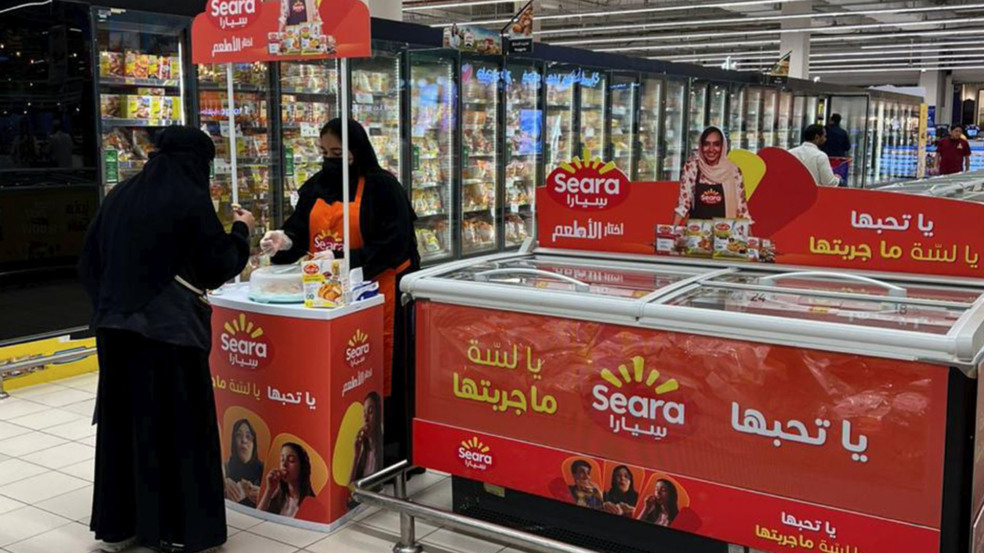
JBS has struck a partnership with a Saudi poultry company to produce chicken locally under its Seara brand, deepening the Brazilian meatpacker’s footprint in the Middle East as Saudi Arabia’s Kingdom pursues a state-backed push for poultry self-sufficiency.
The agreement was signed with Arabian Company for Agricultural and Industrial Investment, known as ENTAJ, a Riyadh-listed poultry producer controlled by Saudi conglomerate Arasco.
With estimated processing capacity of about 600,000 birds a day, ENTAJ provides JBS with an established industrial platform to introduce Seara-branded chicken produced inside the kingdom.
Global protein producers are recalibrating their strategies to preserve access to Saudi Arabia, one of the world’s largest poultry importers, as Vision 2030 steers the market toward local production.
In an interview with The AgriBiz, Seara Chief Executive Officer João Campos said the partnership offers a faster and lower-risk entry into domestic poultry production than building operations from the ground up.
Saudi Arabia has long signaled that foreign suppliers wishing to remain relevant in its protein market must invest locally. Poultry has been a central pillar of that policy, with the government encouraging joint ventures and capacity expansion to reduce reliance on imports and strengthen food security.
Notícias Relacionadas
COMMODITIES
European Retailers Warn Traders: Brazil's Soy Moratorium Still Stands
Retailers are signaling that they will begin assessing companies individually, applying the same criteria used under the soy moratorium
AGRICULTURE
Brazil Set to Harvest Another Record Soybean Crop
Farmers are expected to reap the highest yields ever despite a credit crunch in the nation
JBS now joins a growing list of Brazilian protein groups that have adapted their strategies to Saudi industrial policy.
Rival MBRF, owner of the Sadia and Perdigão brands, has built a significant presence in the country through Sadia Halal and partnerships with local investors. Vibra, another Brazilian food company, has also aligned with Vision 2030 through a joint venture with Saudi poultry producer Tanmiah Food.
By embedding production in the kingdom, these companies remain closely aligned with Saudi policy objectives, insulating their businesses from potential trade frictions that have periodically disrupted meat flows from Brazil and other exporting nations.
JBS’s broader investment push in Saudi Arabia includes roughly $85 million in committed capital, supporting two processed-foods facilities in Dammam and Jeddah.
The Dammam plant, acquired years ago, produces burgers, sausages and chicken franks, while the Jeddah facility began operating nearly a year ago and was formally inaugurated only recently.
According to Campos, the launch of the Jeddah plant quadrupled Seara’s volumes in Saudi Arabia. JBS is now preparing to double the facility’s capacity, with construction work already completed and final equipment installation expected for the coming months.
Seara has supplied Saudi Arabia for more than three decades through exports of Brazilian-produced chicken, gradually building brand recognition among local consumers.